Async Workflows: Sidekiq vs. Temporal
The candidates
The November election is a month away. Here are the “candidates”:

| Candidate | Async job library | License |
|---|---|---|
| Incumbent | Sidekiq | MIT |
| Challenger | Temporal | MIT |
| Up and comers | Postgres-backed durable execution | MIT / Apache 2.0 / varies |
Sidekiq is the Ruby standard for background jobs since 2012.
Temporal is the up-and-comer, with a Ruby-sdk as of September 2025.
The up and comers are a growing group: DBOS, pg_durable by Microsoft, ResonateHQ, Absurd Workflows, Obelis, and others. They promise durable execution managed via a relational database rather than a separate orchestration server.
The demo
The demo is of running a background check process, which is comprised of 10 async jobs that must complete for a Job candidate to be accepted, start work, and get their first paycheck.
The demo ran in Sidekiq, Temporal, and Postgres-backed durable execution (DBOS).
The incumbent: Sidekiq
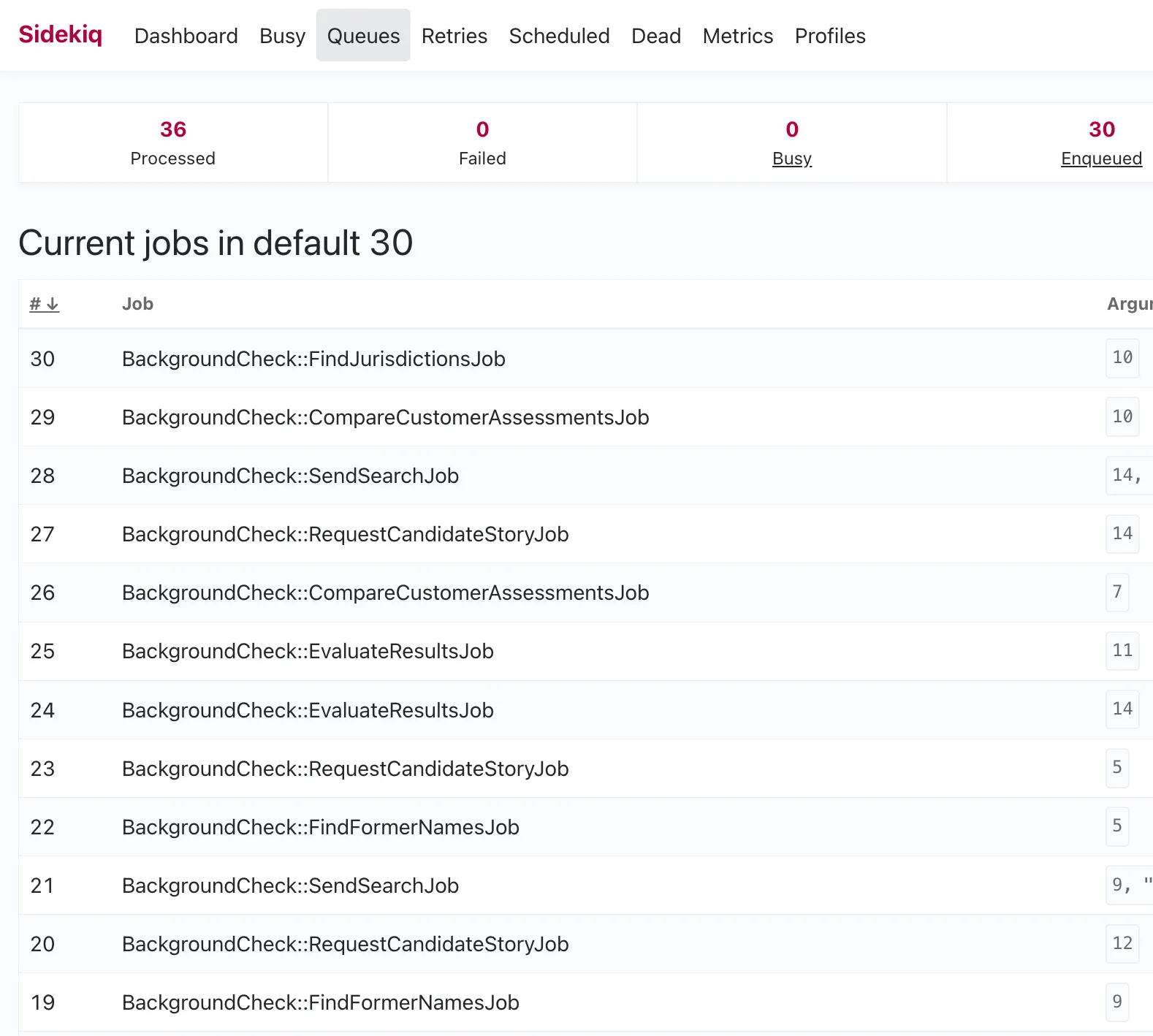
Tracing one background check across many jobs is difficult. We call it the “daisy chain”, where one Background Job triggers another Background Job:
The challenger: Temporal
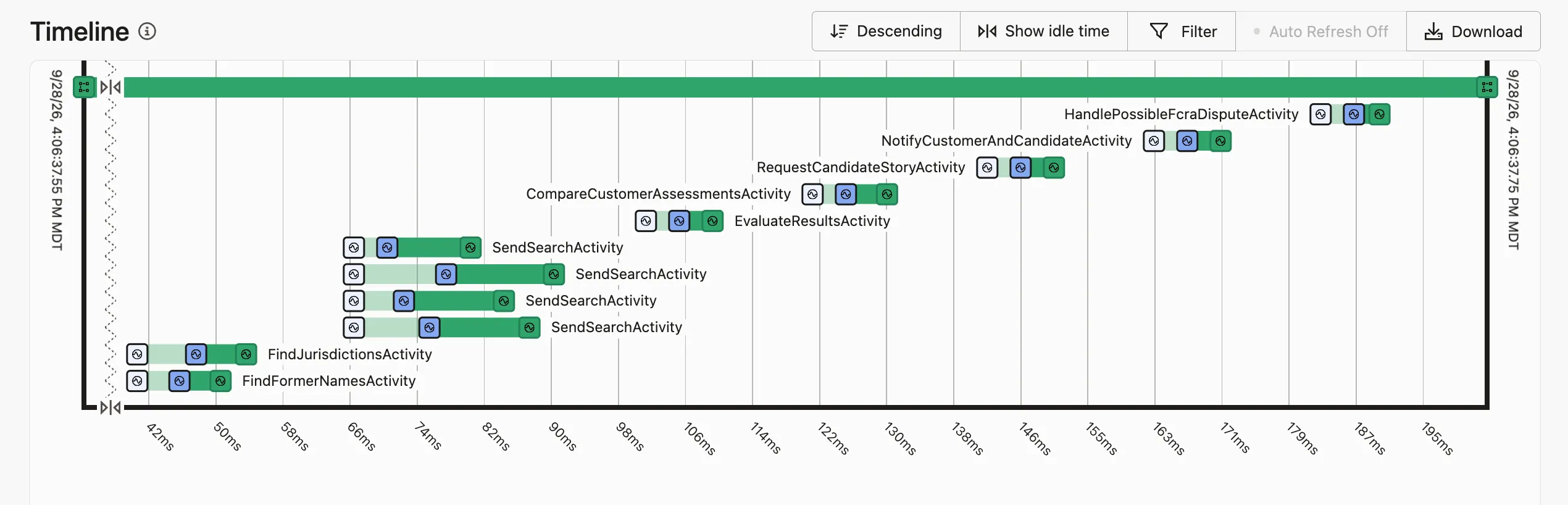
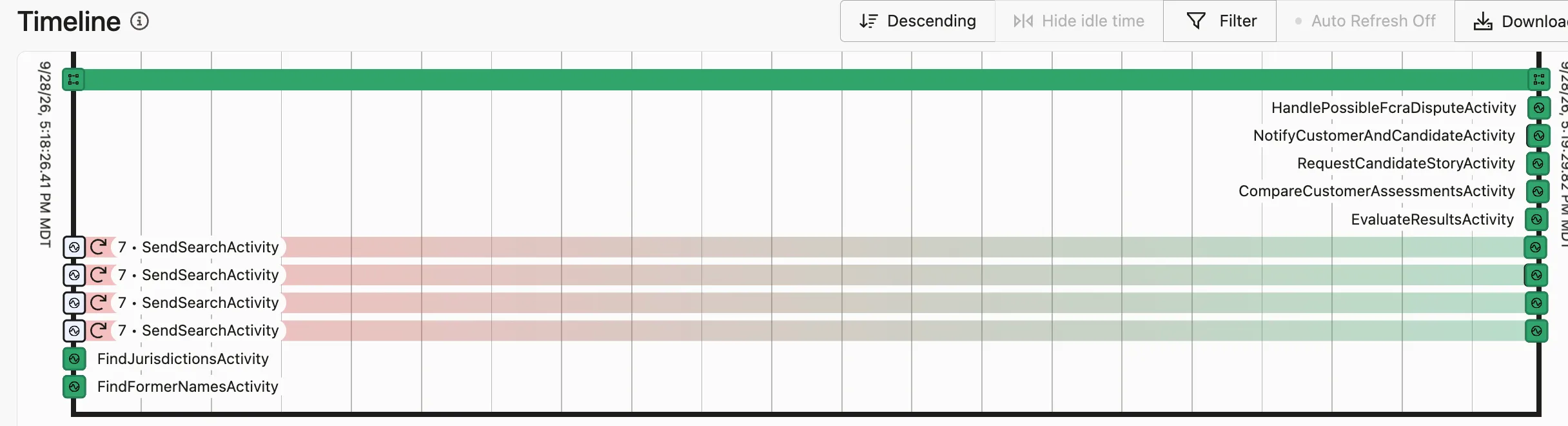
A Workflow is one thread that ties all the Activities together:
Durability: configurable retries
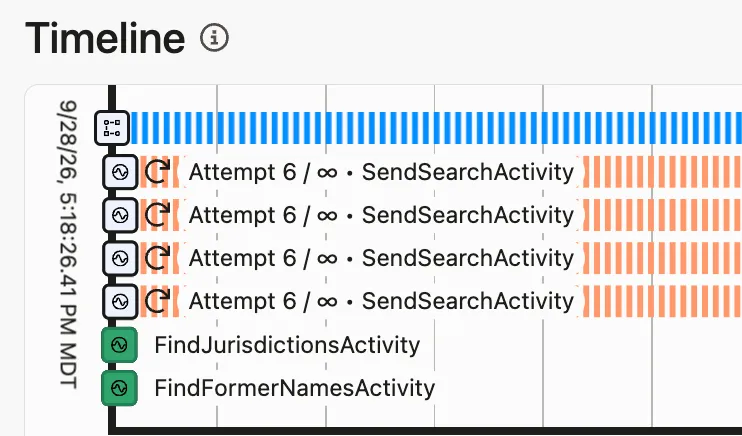
Here the SendSearchActivity is failing:
After the bug is fixed, the Activity and Workflow complete successfully:
Managing agent workflows
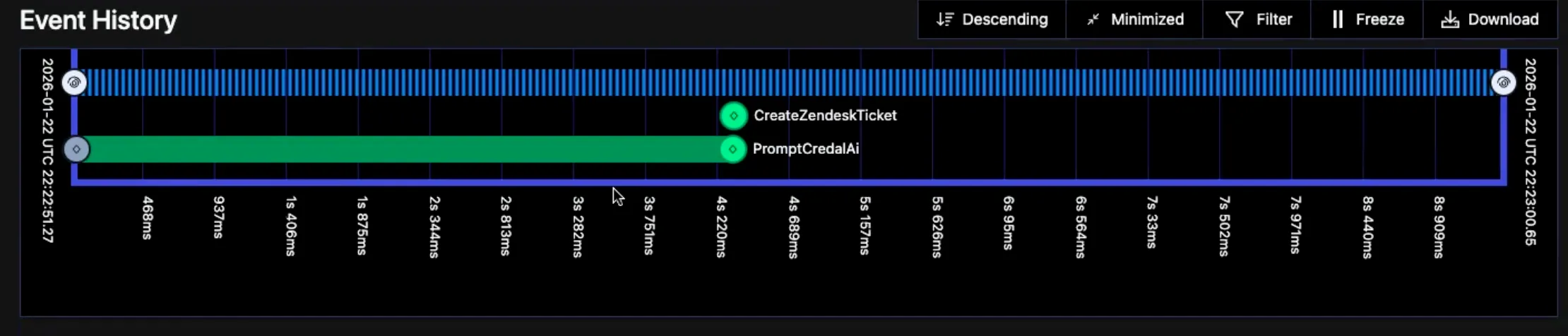
Temporal is also a good fit for agent workflows: failing API requests, and remembering the AI conversation context, with ability to resume days or weeks later.
Cross-language support
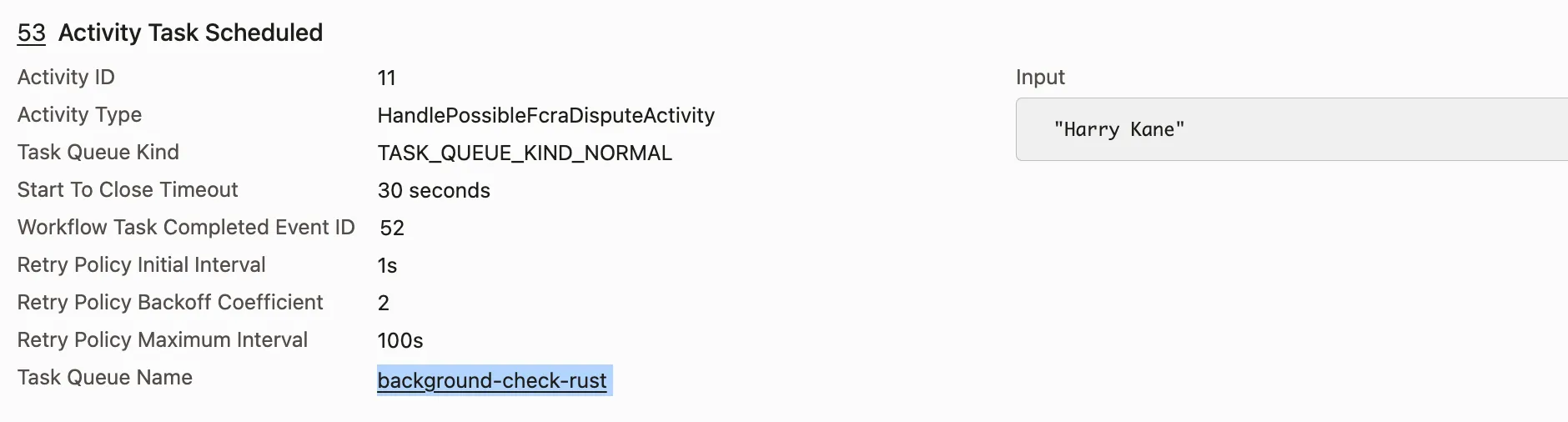
The last Activity is handled by a Rust worker:
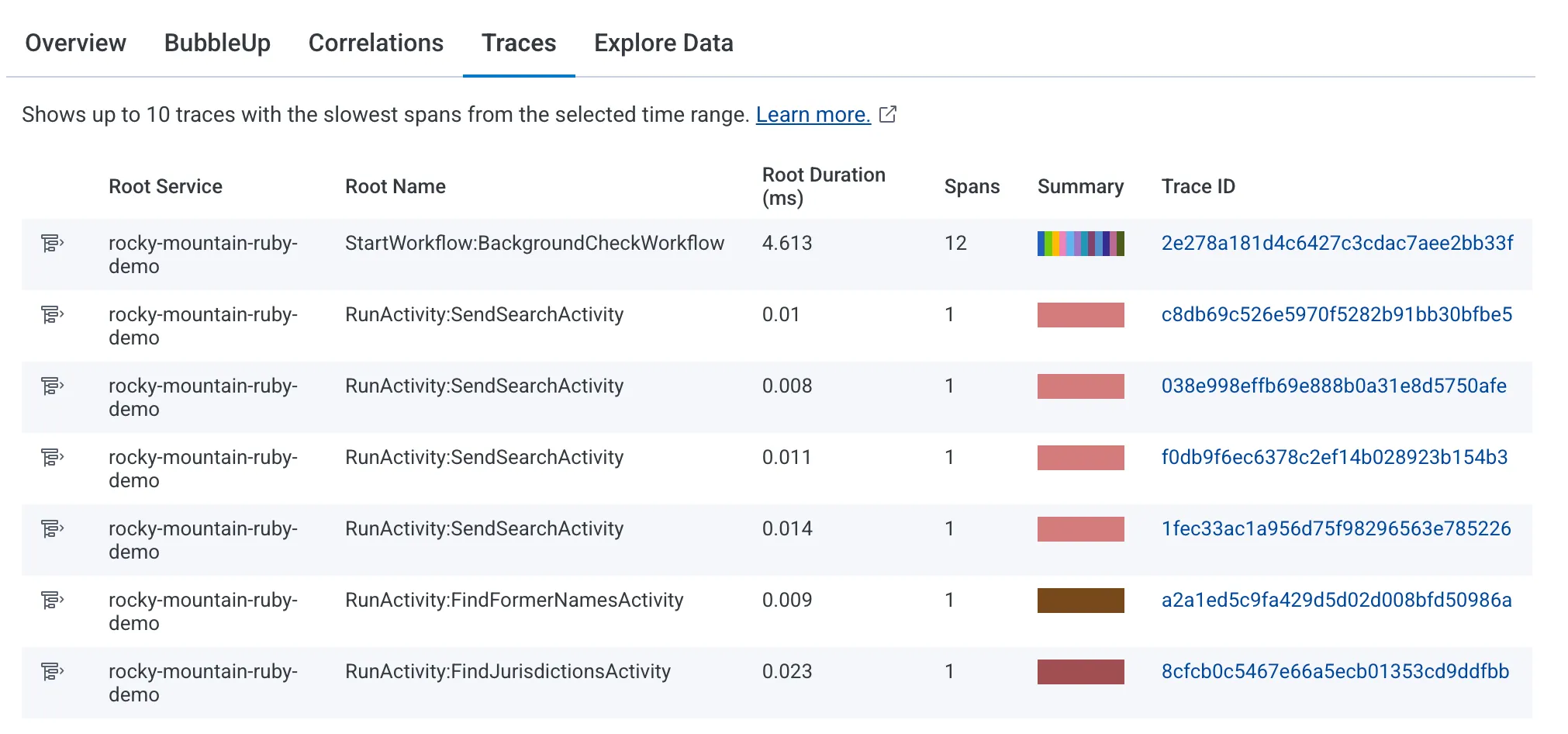
Traces to Honeycomb
The up and comers: DBOS
The same background check running as a Postgres-backed DBOS workflow:

Election Results
The informal “election” poll at RMR was close. With a plurality although not a majority, the winnner was… Sidekiq! 🗳️